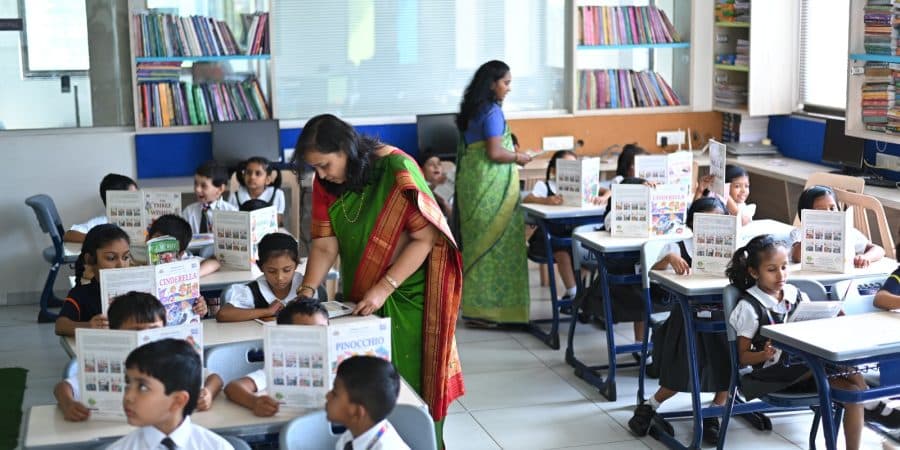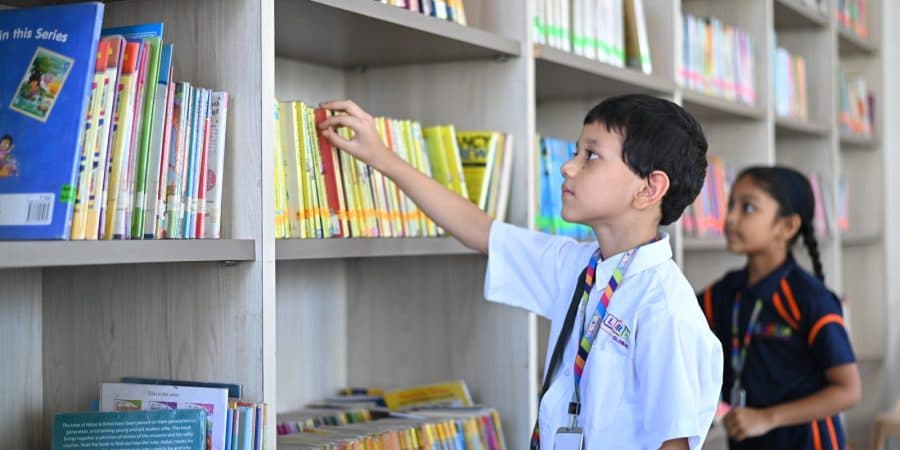
Education is no longer only about remembering information and reproducing it in examinations. Children also need to understand ideas, ask questions, analyse information, make decisions and find solutions to unfamiliar situations. This is why critical thinking and problem-solving skills have become an important part of modern school education. Critical thinking involves analysing information, questioning assumptions, evaluating ideas and forming reasoned judgments. Problem-solving involves identifying a challenge, considering possible approaches, testing solutions and learning from the outcome. Research on school education shows that approaches such as dialogue, authentic problems, inquiry, collaboration and project-based learning can support the development of critical thinking.
Why Are Critical Thinking and Problem-Solving Skills Important?
Children encounter problems every day — both inside and outside the classroom. Whether they are solving a mathematics question, conducting a science experiment, working on a project or deciding how to approach a group task, students need to think rather than simply follow instructions. Developing these skills can help students:
- Analyse information more carefully
- Ask meaningful questions
- Make informed decisions
- Approach challenges with confidence
- Consider different perspectives
- Learn from mistakes
- Apply classroom knowledge to real situations
How Can Schools Develop Critical Thinking Skills?
These skills can also help students become more independent learners.
1. Encourage Students to Ask Questions
A classroom should not be a place where students only answer questions asked by teachers. Students should also feel comfortable asking their own questions. Teachers can encourage questions such as "Why does this happen?", "What evidence supports this idea?" or "Is there another way to solve it?" Such discussions encourage students to examine ideas instead of accepting information automatically.
2. Use Real-World Problems
One effective way to develop problem-solving skills is to give students authentic situations that require them to think about possible solutions. For example, instead of only learning about environmental issues from a textbook, students could be asked, "How can our school reduce plastic waste?" Students could identify the problem, research possible solutions, discuss alternatives and present their recommendations. Exposure to authentic problems has been identified as an effective approach for supporting critical thinking.
3. Encourage Project-Based Learning
Projects allow students to move from learning information to applying it. A well-designed project may involve:
- Identifying a topic or problem
- Researching information
- Working with classmates
- Analysing findings
- Developing a solution
- Presenting the outcome
- Receiving feedback
4. Promote Collaborative Learning
Students can learn from each other when they work in groups. Group activities encourage children to explain their reasoning, listen to different opinions and negotiate possible solutions. Research has found positive effects of collaborative problem-solving on students' critical-thinking development, although the outcomes can depend on factors such as teaching approach, group size, duration and learning support.
5. Make Mistakes Part of Learning
Students sometimes avoid challenging tasks because they are afraid of giving the wrong answer. Schools can create a healthier learning environment by treating mistakes as opportunities to understand what went wrong. Instead of simply saying "This answer is incorrect," teachers can ask "What approach did you use?", "Where do you think the problem occurred?" or "What could you try differently?" This encourages students to reflect, adjust their approach and try again.
6. Use Activities That Require Different Solutions
Some classroom questions have one correct answer. Others can have several possible approaches. Teachers can include puzzles, case studies, experiments, debates, design challenges and open-ended questions that encourage students to explore multiple solutions. This helps students understand that problem-solving is not always about finding the quickest answer — it is about finding a logical and effective approach.
How Parents Can Support These Skills at Home
Schools play an important role, but parents can reinforce critical thinking through everyday activities. Parents can:
- Ask children to explain their reasoning
- Encourage them to make age-appropriate decisions
- Let them solve manageable problems independently
- Discuss different viewpoints
- Play strategy and logic games
- Encourage reading and discussion
- Avoid immediately giving the answer to every question
The Role of Schools in Future-Ready Education
A strong school environment should prepare students not only for examinations but also for situations where they need to think independently. Critical thinking can be incorporated across subjects rather than being treated as a separate topic. Research suggests that critical-thinking instruction can be effective across educational levels and subject areas, particularly when students receive opportunities for dialogue and work with meaningful problems. For a CBSE school in Pune, this approach can complement academic learning by helping students connect concepts with practical situations.
Developing critical thinking and problem-solving skills in students is a continuous process. It requires classrooms where children can ask questions, investigate ideas, work with others, make mistakes and try different solutions. Schools can support this development through inquiry-based learning, projects, real-world challenges, discussions, collaboration and practical activities. The ultimate goal is not simply to teach children what to think, but to help them develop the ability to think, question, analyse and solve problems independently — skills that can support them throughout their education and beyond.